Most deck problems in Henderson don't show up on the first inspection. They show up eighteen months in, when a post footing has shifted, a board has cupped, or an HOA letter arrives asking why there's a structure in the backyard that nobody approved. A lot of that is avoidable if you check the right things before anyone digs a hole. Here's what actually matters in this part of Nevada, not a generic checklist written for a town with real frost and real clay.
What's actually under your lot
Dig down 12 to 24 inches almost anywhere in the Henderson valley and you'll hit caliche, a cemented layer of calcium carbonate that behaves more like soft concrete than soil. A post hole auger that works fine in topsoil will bounce off it. Footings need a breaker bar or a mechanical auger rated for hardpan, and that changes your labor cost before a single board gets ordered. Ask your builder how they plan to set footings, not just how deep. A 10-inch diameter footing poured into a hole that's half-dug through caliche and half backfilled with loose dirt won't carry the load the same way on both sides.
- Ask whether footing depth is based on soil bearing, not frost line. Henderson rarely gets a hard freeze, so the depth requirement is about load, not frost heave.
- Call Nevada 811 before any digging. Drip irrigation lines and low-voltage landscape lighting run shallow under a lot of Henderson yards, often right where a deck footprint wants to go.
Paperwork before the first cut
The City of Henderson issues the building permit for a new deck, and that part is straightforward: submit plans, get a footing inspection before you pour, a framing inspection before the decking goes down, and a final once railings and stairs are in. What trips people up is the HOA. Henderson has a lot of master-planned communities, Anthem, Inspirada, Cadence, Green Valley Ranch, MacDonald Highlands, and most of them require architectural review before you ever apply for the city permit. If your HOA wants stamped plans or a specific railing style and you've already poured concrete, you're redoing it. Get the HOA sign-off first, permit second.
If your lot backs up to a wash, a common area wall, or has a drainage easement along the rear property line, check the setback before you design anything. A plot plan from your original sale paperwork is usually enough, but on older resales it's worth confirming the fence line matches the actual property line. Henderson has plenty of 1990s and early 2000s lots where the fence has drifted a foot or two from the survey over the years.
Where the new deck meets the old house
The ledger board, the piece bolted to your house that carries half the deck's weight, is where most deck failures start nationwide, and Henderson stucco makes it a little trickier. You can't lag bolt a ledger into stucco and call it done. It has to reach the actual rim joist or framing behind the stucco, with flashing that directs any water away from the wall. Rain is infrequent here, but when it comes during monsoon season it comes hard, and a ledger without flashing will eventually rot the sheathing behind it even in a dry climate.
Materials that can actually take July
A deck board sitting in direct Henderson sun in July can hit a surface temperature well past 140°F, and dark composite can run even hotter. If you're set on composite decking, ask about lighter colors or capped boards rated for high heat, and think about whether a pergola or shade cover over part of the deck is worth adding now rather than later. Bare feet on a dark composite board at 2pm in August is not a small complaint.
Wood behaves differently here than it does anywhere humid. Henderson summer humidity can sit below 15 percent for weeks, and kiln-dried lumber that was fine at the lumberyard will shrink and check once it's been baking on your deck for a season. Expect gaps between boards to open up more than they would in a wetter climate, and plan board spacing with that in mind rather than butting everything tight.
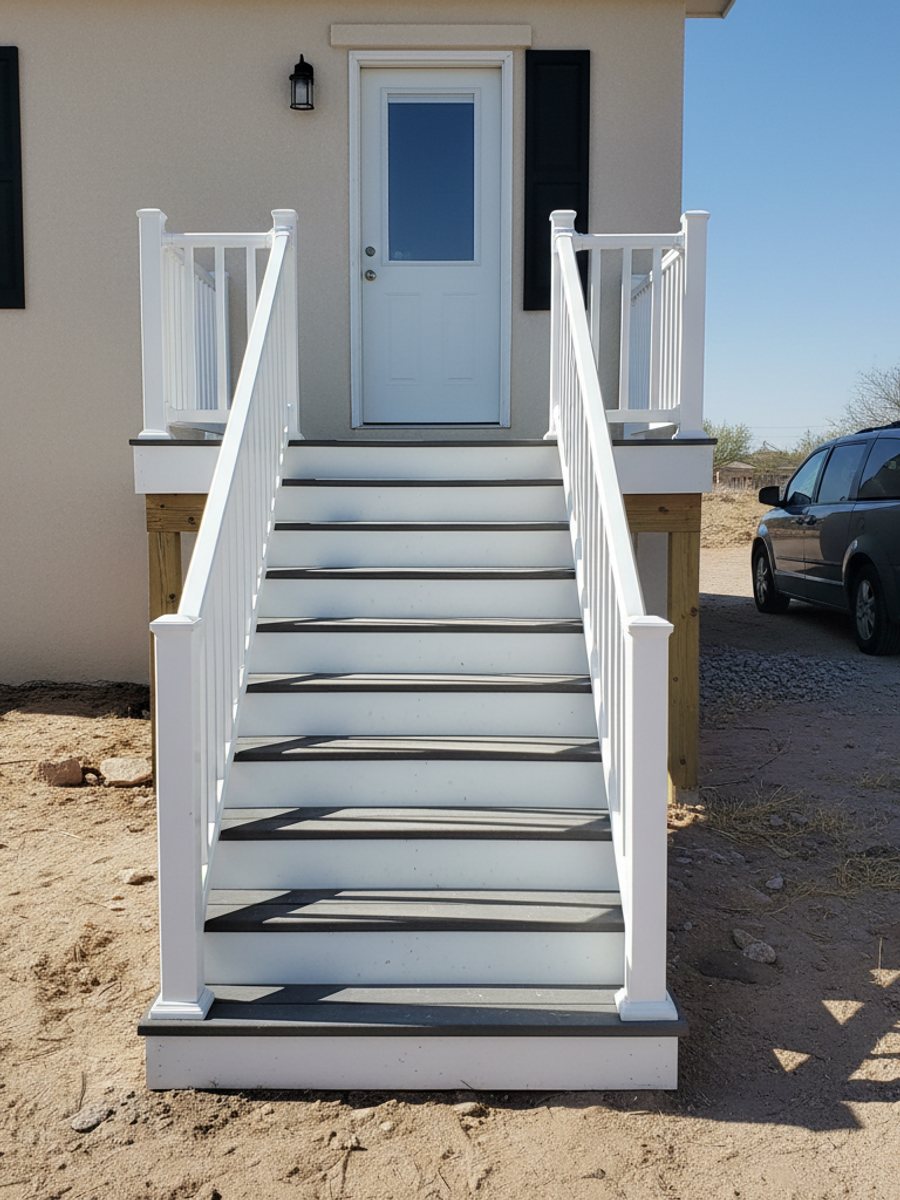
Railings are a separate question. Code generally requires that a 4-inch sphere can't pass through the balusters, which matters for resale and for inspection whether you're building new or replacing an old railing that was never up to that spacing in the first place.
Drainage and the monsoon
Most Henderson lots are graded to move water toward the street or a drainage swale, and that grading matters more than people think once a deck sits on top of it. A heavy monsoon cell between July and September can drop close to an inch of rain in under an hour, and a deck surface or footing area that holds water instead of shedding it will eventually undermine a footing or rot a post base. Check that the deck design doesn't trap water against the house foundation, and that downspouts aren't dumping straight under the new deck.
If there's an old deck coming out first
Tear-out on an older Henderson deck, especially anything built during the building boom of the late 1990s through mid-2000s, often turns up undersized footings by current standards, rusted carriage bolts, and sometimes a ledger that was never flashed at all. Plan for a haul-off of old lumber and old concrete chunks as its own line item, and don't assume the new deck can reuse the old footing locations without checking them first.
One more timing note: a poured footing needs roughly 48 to 72 hours before it's loaded with framing, longer if it's a hot pour that needs to be kept damp so it doesn't cure too fast and crack at the surface. In August heat that curing schedule gets tighter, not looser, no matter how tempting it is to frame the next day.
None of this is complicated once somebody's walked you through it, but it's the kind of detail that separates a deck that's still solid in ten years from one that needs a footing replaced in three. If you want someone who deals with Henderson soil and Henderson HOAs on a regular basis to walk the lot with you before anything's signed, that's Majestic Deck Solutions.