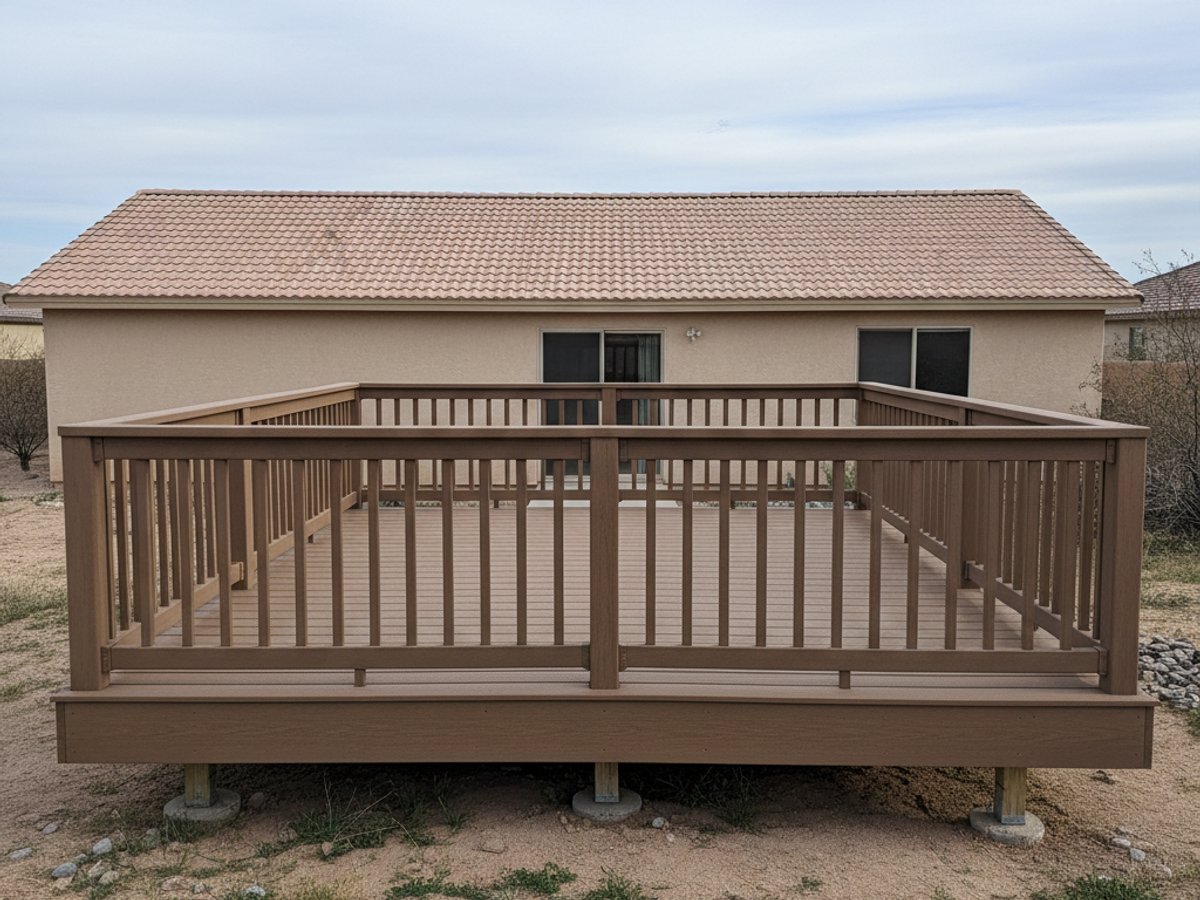
Henderson has more decks going up than it did ten years ago, and more decks failing than most homeowners realize, usually quietly, usually at the ledger board or the footings, usually because whoever built it skipped a step nobody could see once the boards went down. Picking a builder here isn't that different from picking one anywhere else, except the ground and the sun make certain corners more expensive to cut and easier to hide.
Start with the license, not the portfolio
Any deck builder working in Nevada should carry a license through the Nevada State Contractors Board. Ask for the license number and look it up yourself, it takes two minutes and tells you whether there are complaints against it. A B-2 residential license or C-limited license is what you're looking for depending on the scope. If someone tells you they don't need a license because it's "just a deck," that's not a technicality, it's a reason to stop the conversation. Nevada requires a permit for most deck construction over a certain height or attached to the house, and an unlicensed contractor either doesn't know that or is hoping you won't ask.
Insurance matters just as much. Ask for a certificate of general liability and workers' comp coverage, not just a verbal "yeah we're covered." If a worker falls off a ledger board attachment on your property and the company has no comp coverage, that liability can land on you.
Permits and the City of Henderson
Henderson pulls permits for new deck construction, deck additions that change the footprint, and most structural repairs. A straightforward stain-and-seal job doesn't need one. A new 300-square-foot deck attached to the house does, and it'll get inspected at least twice, once for footings before you pour, and again at framing before the decking goes on. A good builder pulls the permit themselves and schedules those inspections without you having to chase them. If a contractor suggests skipping the permit to save time or money, understand what you're actually trading away: no inspection record if something fails later, and a real headache if you ever sell the house and a buyer's inspector finds an unpermitted structure.
If you're in a community with an HOA, and a lot of Henderson is, Anthem, Green Valley Ranch, Inspirada, Seven Hills, you'll likely need architectural approval before the city permit even gets submitted. Ask your builder if they've dealt with your specific HOA before. Rail height, color, and setback from the property line are the things HOAs usually push back on.
What the ground here actually does to a deck
Most of the Las Vegas Valley, Henderson included, sits on caliche, a hardpan layer of calcium carbonate-cemented soil that can start a foot or two down and be tough enough to need a jackhammer or an auger with real torque. This changes two things. First, digging footings takes longer and costs more than it would in soft soil, and a bid that seems suspiciously low may be assuming a dig that isn't realistic for your lot. Second, footings need to bear on undisturbed soil below that caliche layer, typically 18 to 24 inches down depending on the local building code and the load, not just poured into loose fill because it was easier to break through.
Henderson doesn't have the deep frost line that forces footings 42 inches down like it does in the Midwest, but shallow footings poured on disturbed or poorly compacted soil are still the most common structural failure I see on older decks in this valley. If your builder can't explain how deep they're going and why, ask again before they pour.
Materials, sun, and what actually fails first
Henderson gets over 100 days a year above 100°F, and UV exposure here is brutal on anything left unprotected. Pressure-treated pine will check and gray within a couple of summers if it's not sealed, and needs restaining roughly every two to three years depending on sun exposure, more often on a south-facing deck with no shade. Composite decking handles UV better and won't rot, but it does expand and contract with heat, boards need a gap of about 1/8 inch between them and proper fastening that allows for movement, or you'll get buckling by the second summer.
The single most common failure point on an attached deck, in Henderson or anywhere, is the ledger board, the piece that bolts the deck to the house. It needs to be lag-bolted or through-bolted into the rim joist, not just nailed, and it needs proper flashing behind it so water doesn't run down between the deck and the house siding. A deck that pulls away from the house in a wind event almost always failed there first. Ask your builder how they're attaching the ledger. If they shrug, that's your answer.
Reading the contract and the red flags
A real contract spells out the material brand and grade (not just "composite decking" but which product line), the footing depth, the fastener type, the payment schedule, and a rough timeline. A typical residential deck in this size range takes anywhere from one to three weeks from permit approval to final inspection, longer if it's a custom design with a pergola or built-in stairs. Weather rarely delays work here the way it does elsewhere, but monsoon season, roughly July through September, does bring sudden downpours that can flood a job site for a day.
Walk away from a contractor who wants full payment up front. A deposit of 10 to 30 percent to cover materials is normal, the rest should follow the work, not precede it. Walk away from anyone who won't put the scope in writing, who avoids the permit question, or who can't show you a license number that checks out. And be skeptical of a bid that's dramatically lower than three others for the same footprint and material, since in caliche country, that difference usually comes out of the footings you'll never see again once the decking's down.
None of this is complicated once you know what to ask. It's the reason we walk clients through the license, the permit, and the footing plan before we ever talk about railing style or stain color. If you want to see how we handle that end to end, take a look at Majestic Deck Solutions.